The Question Nobody's Answering
If AI makes us faster, where's the proof?
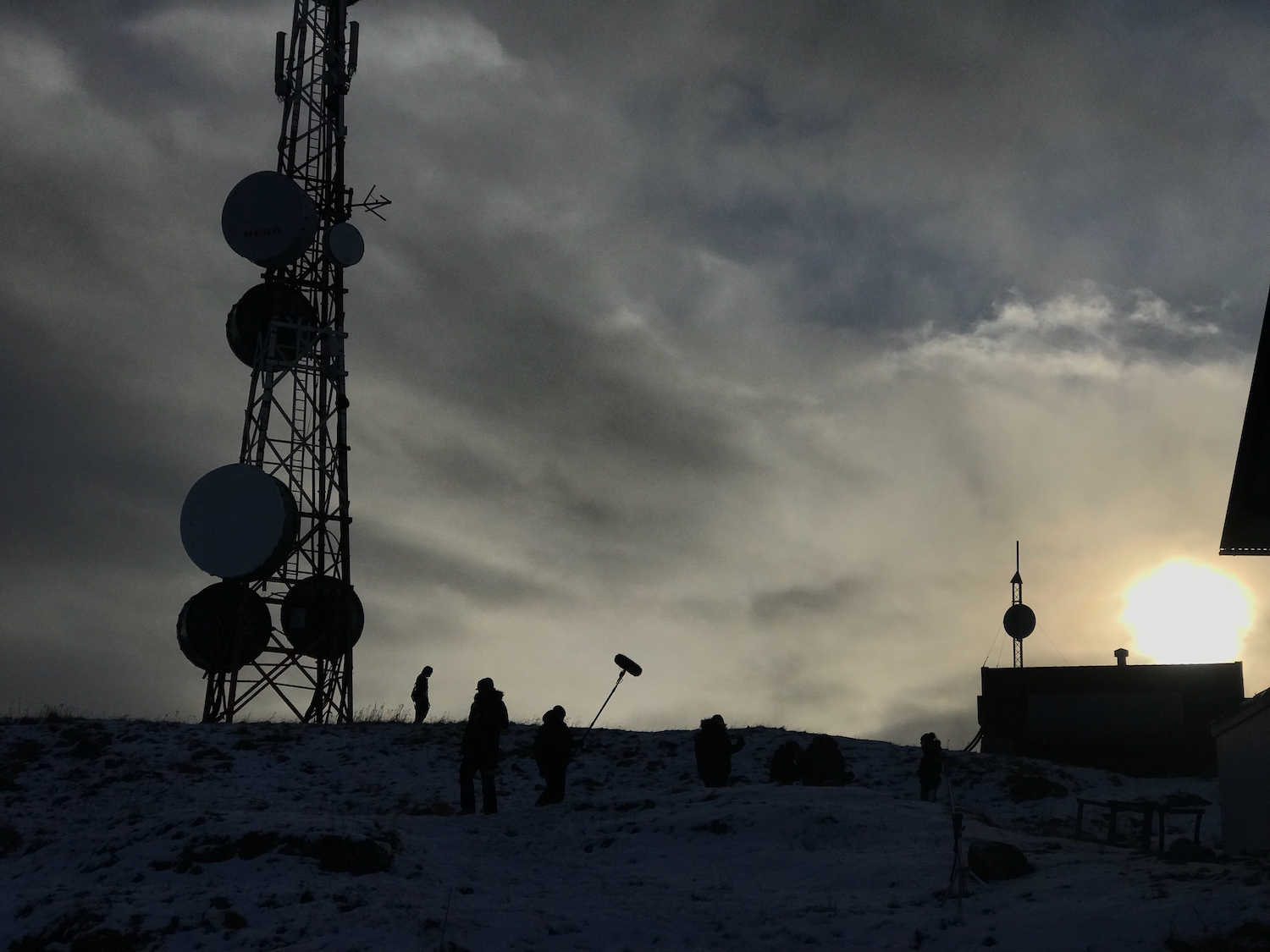
I have spent more than twenty years watching film budgets at close range, from hauling gear as a transport coordinator on projects such as Interstellar and Batman Begins to producing large Icelandic television dramas and service shoots like Range Rover’s “Spillway Challenge” at Kárahnjúkar Dam. I have seen each new piece of technology arrive with the same promise: it will make us faster, cheaper, better. Yet when you return to the budget lines and the schedule, it is rare to find anyone who has measured whether that promise actually came true.
This is not only a film problem. It is the latest chapter in a much older story.
The Paradox Is Back
In 1987, the economist Robert Solow looked at the spread of personal computers in offices and asked a now famous question: why can we see the computer age everywhere except in the productivity statistics. American businesses were buying PCs at a remarkable pace, yet the national productivity figures barely moved. Between 1947 and 1973, before modern information technology, US labour productivity grew by about 2.7% per year; in the PC era of 1990–2001 it slipped to 2.1%, and from 2007–2019, it slowed further to around 1.5%.
In January 2026, J. P. Gownder at Forrester more or less repeated Solow’s observation, this time about artificial intelligence. Looking at US Bureau of Labor Statistics data and a broad survey of companies, he summed it up bluntly: “Where we are today, we’re not seeing it.” Generative AI appears everywhere in headlines and investor presentations, but almost nowhere in the macro‑level productivity numbers.
Where we are today, we’re not seeing it in the productivity data, AI is everywhere in projects, but nowhere in the statistics.
Forrester’s research suggests that only about 13 to 15 per cent of AI decision‑makers report a positive impact on EBITDA, and fewer than one in three can clearly link AI projects to P&L changes. In spite of that, companies continue to push forward. A 2026 survey of more than two thousand executives shows firms planning to double their AI spending, from roughly 0.8 per cent of revenue in 2025 to 1.7 per cent in 2026, and a very large majority of chief executives intend to keep investing even if they do not see clear returns in the coming year.
Productivity is flat, returns are uncertain, and investment is accelerating. Anyone who has sat in a budget meeting where a new tool is added “because we have to keep up” will recognize the pattern at once.
The Task-Level Mirage
The paradox becomes more interesting when we move closer to the work itself.
At the level of individual tasks, AI often does appear to deliver. In a large study of more than five thousand customer‑service agents at a Fortune 500 company, Erik Brynjolfsson and his co‑authors found that access to an AI assistant increased productivity by about 14 per cent on average. Novice workers gained roughly 34 per cent, while the top performers hardly improved at all. The tool helped the weakest agents become faster and more accurate; the best agents were already close to the ceiling.
Another experiment, the “Jagged Technological Frontier” study conducted by Harvard Business School and BCG, put 758 consultants through eighteen realistic business tasks. For tasks that sat squarely inside AI’s capabilities, those using AI completed 12.2 per cent more tasks, 25.1 per cent faster, and at 40 per cent higher quality. For tasks just outside that frontier, the pattern reversed, and consultants using AI were 19 percentage points less likely to reach the correct answer. The system amplified both competence and overconfidence.
A recent analysis from Forbes and Wharton captures this tension succinctly: AI delivers improvements of 14 to 55 per cent at the task level, yet roughly 95% of enterprise gen‑AI pilots fail to deliver measurable return on investment. That 95 per cent figure comes from MIT research which tracked more than three hundred projects and found that only about five per cent made it into production with identifiable P&L impact.
On the ground, inside a ticketing system or a consulting slide deck, things may genuinely move faster. At the level of the organisation, very little appears to change. Anyone who has introduced a new project‑management tool to a production, only to watch the team spend more time updating boards than actually shooting, has already lived through this distinction: local gains, global noise.
The Trillion Dollar Bet
In spite of this ambiguity, the sums flowing into AI are unprecedented.
Goldman Sachs estimates that large technology and adjacent firms spent roughly four hundred billion dollars on AI‑related infrastructure in 2025, and that investment is likely to exceed five hundred billion dollars in 2026 as data centres, GPUs and training runs expand. At the same time, Daron Acemoglu, an MIT economist and Nobel laureate, describes AI’s likely macro‑economic effect as modest. His reading of the current evidence points to a one‑to‑one‑point‑six per cent increase in US GDP over the next decade, implying only a small annual boost to productivity.
The Penn Wharton Budget Model arrives at a similar conclusion. Even under optimistic assumptions, generative AI adds roughly 0.2 percentage points to annual productivity growth at its peak in the early 2030s, with cumulative GDP gains of about 1.5 per cent by 2035. These are not trivial numbers, but they are far removed from the rhetoric of imminent revolution.
We therefore find ourselves in the middle of a vast experiment in which the most careful projections describe “small but real” progress, not a sudden transformation. The same dynamic is visible in film. Executives speak of AI as a turning point, but when one asks which budget line actually shrank on the last show because of AI, the room tends to fall quiet.
Adopting Without Measuring in Film
Within film and television, the data is thinner still, and that is part of the difficulty.
McKinsey’s 2026 analysis of AI in film and TV, based on interviews with studio executives, production heads and vendors, suggests that early adopters are seeing 5 to 10 per cent productivity gains in specific pre‑production use cases, such as script breakdowns, animatics and asset reuse. These are not negligible improvements, yet they are a far cry from the sweeping claims often made in marketing materials.
Another report from the same firm estimates that around ten billion dollars of US content spend by 2030 could be directly addressable by AI, with as much as sixty billion dollars of value potentially redistributed each year as workflows and power structures shift. Alongside these figures, however, McKinsey offers a sobering reminder. When CGI became mainstream, it did not make films cheaper. Over the past two decades, the average production budget of top‑tier Hollywood releases has risen by roughly 30 per cent, with VFX‑heavy blockbusters leading the way.
Many of us have observed the same pattern from the inside. New tools and better visual effects have given creative teams more options, not cheaper projects. When the cost of an individual shot falls, the instinct is rarely to return the savings; it is to add three more shots.
Deloitte’s 2025 media outlook underlines how early we still are in this process. The firm expects the largest US and European studios to devote less than three per cent of total production budgets to generative‑AI tools in the near term. That is the scale of experimentation, not the scale of transformation.
What is striking is how little of this is measured in a disciplined way. There is no cross‑studio benchmark demonstrating that AI‑assisted breakdowns shorten pre‑production by a certain percentage across a meaningful number of shows. There is no common dataset on hours saved per episode when using AI‑assisted scheduling. There are no agreed‑upon key performance indicators for “AI‑enabled” productions.
My own vantage point has been shaped by running major departments at Sagafilm, building Polarama and Polarama Greenland as service hubs for features and television series, and spending nights at Kárahnjúkar Dam making sure a Land Rover truly survives the spillway. Over the years I have watched tool after tool come and go. Cameras became lighter. Dailies moved to digital. Location scouting shifted from ring binders to shared folders, and eventually I helped build Massif Network because even those folders were no longer enough.
One thing almost never changed. Productions rarely tracked, in a systematic way, whether any of these shifts materially altered the budget or the schedule. Artificial intelligence is arriving in that same culture.
Don’t Ask, Don’t Tell
There’s also a culture of silence that makes honest evaluation harder.
In January 2026, Erik Barmack wrote in The Ankler about the Academy’s stance on AI. The position, in effect, is that AI “neither helps nor harms” a film’s Oscar chances. That sounds neutral, yet its implications are clear. A film may employ generative tools for concept art, storyboards, dialogue passes, crowd scenes and marketing assets, and the Academy does not inquire, does not require disclosure and does not treat this information as relevant to voters.
Barmack describes this as a “don’t ask, don’t tell” regime. AI is present in the pipeline, but absent from the conversation.
By contrast, when Netflix used generative AI for a collapse sequence in the Argentine science‑fiction series The Eternaut, the company said so openly and noted that the work was completed roughly ten times faster than it would have been by traditional means. One may agree or disagree with the choice, but at least there is a specific claim and a number that can be examined.
At the level of craft, the same tension appears in more personal ways. In the Los Angeles Times “Hollywood Tomorrow” series, production designer Rick Carter, a two‑time Oscar winner, describes experimenting with Midjourney and Runway during the pandemic, while noting that many colleagues prefer to keep their AI use hidden. They generate an image, then trace or repaint it so there is “no digital trail.” Diego Mariscal, a dolly grip who runs the Crew Stories Facebook group, recalls a visual‑effects supervisor telling him that blue screens were no longer needed for certain commercials because “I just use AI to clip it out.”
If people feel they cannot speak openly about how they are using these tools, the industry as a whole cannot learn from their experience. Each show becomes a sealed experiment, and the lessons remain private.
The Context Is An Industry Under Pressure
All of this is taking place in an industry that is already under strain.
In Los Angeles County, an estimated forty‑two thousand film and television jobs have disappeared over the past two or three years, reducing employment from roughly 142,000 to about 100,000 by late 2024. FilmLA reports that on‑location shoot days in Greater Los Angeles fell to 19,694 in 2025, a decline of 16.1 per cent from the year before and the lowest level since the pandemic. Television production now sits more than fifty per cent below its recent five‑year average.
The reasons are layered: dual strikes, a retrenchment in streaming, increased international competition and ongoing consolidation. Artificial intelligence does not arrive in a neutral environment. It lands on top of fragile crews, brittle financing structures, compressed schedules and a workforce that has already absorbed several shocks.
In the LA Times article mentioned above, Diego Mariscal gives voice to the anxiety many crew members feel. “I’ve been doing this since I was nineteen,” he says of his speciality dolly work. “What else can I do. I can push a cart in a parking lot. I can push a lawnmower.” When a visual‑effects supervisor casually mentions eliminating blue screen on commercials thanks to AI, Mariscal hears a direct threat to the set‑building ecosystem of which he is a part.
If you have spent years building teams at Sagafilm, then at Polarama, then launching a location‑scouting platform and now an AI‑driven workflow tool, you know that any change introduced into this ecosystem carries a human cost when it is made blindly. The very least we can do is establish whether the change works.
The Budget Test
This is where the idea of The Budget Test comes in.
The concept is almost embarrassingly simple, which is part of its appeal. If a tool does not change your schedule or your budget in a way you can plainly see and document, you should treat it as a toy rather than as a transformative revolution.
It does not matter whether the tool is AI‑based or not, or whether the vendor promises “up to 40 per cent efficiency.” What matters is the following.
- Did your prep days shrink on the next show.
- Did your overtime decrease.
- Did your contingency shrink.
- Did you deliver earlier for the same or better quality.
If the answer to these questions is no, then the friction introduced by the tool may well outweigh its benefits, even if a few tasks inside it feel quicker.
Other industries are already running versions of this test. Brynjolfsson’s customer‑service study, the Harvard and BCG consultant experiments, MIT’s GenAI pilot research, Forrester’s EBITDA surveys and Wharton’s macro‑modelling exercises are all attempts to connect tools to outcomes with real numbers. The results are often underwhelming, but that is precisely the point. Disappointment is a form of learning.
In film, we are largely skipping this step. We add tools and call it innovation.
In the rest of this series, I intend to do three things: to look honestly at our pre‑existing workflow problems, the chaos onto which AI is now being placed; to examine what other industries have truly learned from their first AI wave; and to outline a practical, production‑tested way for any team, from a Netflix series to a two‑person Arctic documentary, to run its own Budget Test.
I do not write this as a technologist observing film from the outside. I write as someone who has helped build Greenlandic film infrastructure, who has run service units for large US productions in Iceland, who has sat through more budget meetings than he cares to count, and who has then tried to build tools, first Massif, now AIMgr, that address problems he has personally encountered.
I do not need AI to be good or bad. I need it to be measurable. In a business where every day on the schedule and every line on the budget is contested, “we think this tool helps” is no longer enough.
This is the first post in a 10‑part series called “The Budget Test,” exploring whether AI is actually changing the economics of film production or just the way we talk about it.